
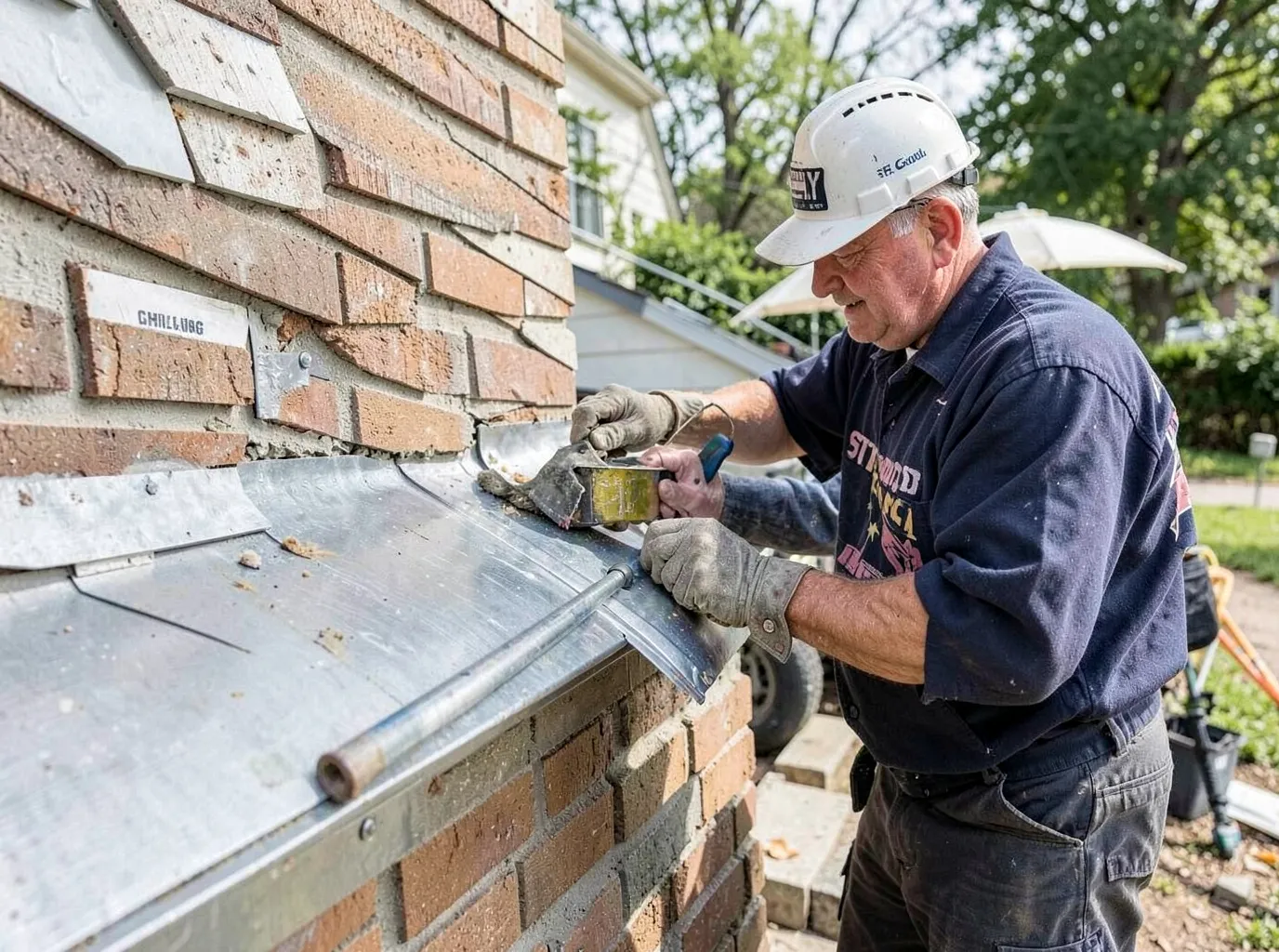
St. Cloud homes built before 1960 often have brick chimneys with original lead or copper flashing that has fatigued from decades of snow load and spring melt cycles. When ice dams form along the roof-chimney joint, water finds the lifted edges and travels under shingles into attic insulation. Replacing the flashing requires cutting back shingles without damaging the existing roof plane, then installing new step flashing that ties into both the chimney mortar joints and the roof underlayment.
Freeze-thaw movement in Stearns County pushes mortar and metal apart each winter, so we bed new flashing in high-temperature sealant rated for -20 °F rather than standard caulk. On homes near the Mississippi River where wind-driven snow is common, we also add a cricket or diverter above the chimney to reduce snow accumulation against the back wall. Proper counter-flashing is tucked into a reglet cut in the brick and secured with lead wedges before the joint is pointed.
Access on two-story homes in neighborhoods like South Side or near St. Cloud State requires scaffolding rather than ladders because of the steep pitches common on these roofs. We inspect the chimney crown and flue while on site because cracked crowns allow water to run down inside the flue and saturate the flashing from below. All work is scheduled during business hours so homeowners can be present for the final water test.
Technician insight
In St. Cloud, the thing that catches most people out with Chimney Flashing Repair is how repeated ice dams along the north side of chimneys on pre-1950 homes lift the back flashing first; once that happens, meltwater runs straight into the attic even when the front looks fine.
South Side Chimney Leak After Heavy Snow
Water stains appeared on the ceiling of a 1948 bungalow near the river after a March melt. We found the original lead flashing had pulled away from the brick on the back wall where snow had piled against the chimney. New copper step flashing and a small cricket were installed; the homeowner reported no further leaks the following winter.
Chimney Flashing Repair Services We Offer
✓Chimney Flashing Replacement
Full removal of failed step and counter flashing followed by new copper or painted steel flashing tied into existing shingles and brick joints.
✓Ice Dam Flashing Repairs
Targeted reinforcement of flashing at chimney backs where repeated ice dams have lifted metal and allowed meltwater entry.
✓Cricket Installation Above Chimney
Addition of a small roof diverter that routes snow and water around the chimney to reduce pressure on flashing in heavy snow areas.
✓Counter Flashing Re-Pointing
Cutting new reglets in brick and re-sealing counter flashing while restoring mortar joints that have cracked from winter movement.
✓Chimney Crown and Flashing Combo
Repair of cracked chimney crowns combined with new flashing to stop water that enters from above and saturates flashing from the inside.
Chimney Flashing Repair Cost in St. Cloud, MN
| Service | Typical Range | What Affects It |
|---|---|---|
| Standard Flashing Replacement | $350–$650 | Single-story homes with easy access |
| Two-Story Chimney Flashing | $550–$950 | Includes scaffolding and extra safety measures |
| Flashing Plus Cricket | $750–$1,200 | Added when snow accumulation is severe |
| Flashing And Crown Repair | $600–$1,050 | Combined job on older brick chimneys |
Ranges are typical for St. Cloud, MN and confirmed with an exact written quote before any work starts.
How it works
- 1
On-Site Inspection
We examine flashing condition, chimney crown, roof pitch, and access points from the ground and attic on St. Cloud homes.
- 2
Material Selection
Choose copper or galvanized steel flashing matched to existing roof color and rated for Minnesota temperature swings.
- 3
Flashing Removal And Prep
Carefully lift shingles, remove old metal, clean mortar joints, and install new underlayment strips around the chimney base.
- 4
New Flashing Installation
Set step flashing, tuck counter flashing into reglet, seal all joints, and reinstall shingles with proper overlap.
- 5
Water Test And Cleanup
Run a controlled hose test from the roof and confirm no interior leaks before removing equipment.
Pricing
Upfront quote after inspection; price driven by chimney height, roof pitch, and whether a cricket is needed.